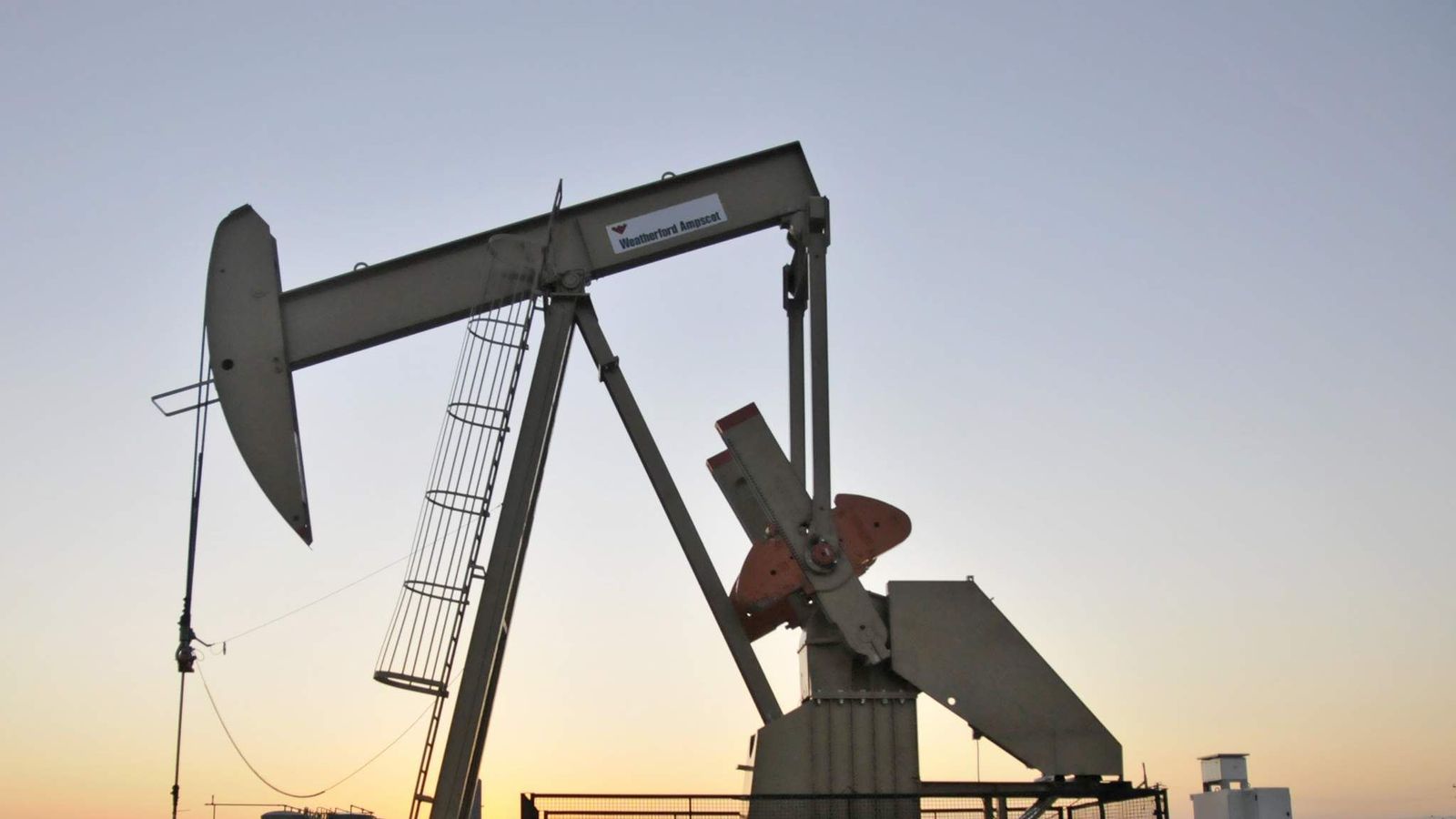
Oil prices have fallen sharply and stock markets have soared on news of a two-week ceasefire between the US, Israel and Iran.
Oil has dropped roughly 14%, falling below $100 to $94 for a barrel of benchmark Brent crude.
Iran war latest: Trump declares ‘big day for world peace’
Not since the early days of the war has the price fallen so low. But it’s still far above pre-war levels – around $72 – as supply concerns remain.
It’s also significantly above the $69 a barrel price of 2025.
Particularly welcome for British households is the plummet in UK wholesale gas prices. They’ve dropped more than 18% to a low last seen on 2 March.
Though, as with oil, at 110 pence per unit of gas, it’s still way above the 78 pence pre-war level.
News from the Iranians of the reopening of the key oil and gas shipping lane, the Strait of Hormuz, is behind that price fall.
Not all plain sailing
Now, however, is the scramble to recommence production and to get vessels moving.
It will take time for powered-down oil and gas producers to reach pre-war output.
And the refineries, which have been without crude product to turn into things like aviation fuel, will take time to receive, produce and ship oil and gas derivatives.
Supply woes won’t speedily be unwound. Farmers will likely face elevated fertiliser prices and petrol and diesel will be more expensive for weeks at least.
These issues may prevent oil and gas prices from plummeting.
And that’s where the impacts on the UK come in. Higher fossil fuel costs push prices up across the economy.
Massive stock market rises
This hasn’t stopped stock markets from rallying.
The UK’s top-flight FTSE 100 index, of most valuable companies on the London Stock Exchange, is up a big more than 1.5%.
Flagship stock indexes of major Asian economies have posted massive rises.
South Korea’s flagship stock index, the Kospi, is up nearly 7%.
Japan’s Nikkei is up a massive 5.5%.
Both were heavily reliant on Middle East imports and had suffered panic buying amid fears of shortages.